
I stand at the beginning of the buttonhole stage of this wool doublet. This tends to be a bit of a slog, as there’s about 14-18 buttonholes.
Modern Maker (MM) recommends doing a few buttonholes on cabbage to get into the groove when you sit down, so I did just that tonight and wanted to show some of the process and make a point about the difference between blanket stitch and buttonhole stitch, in this context.
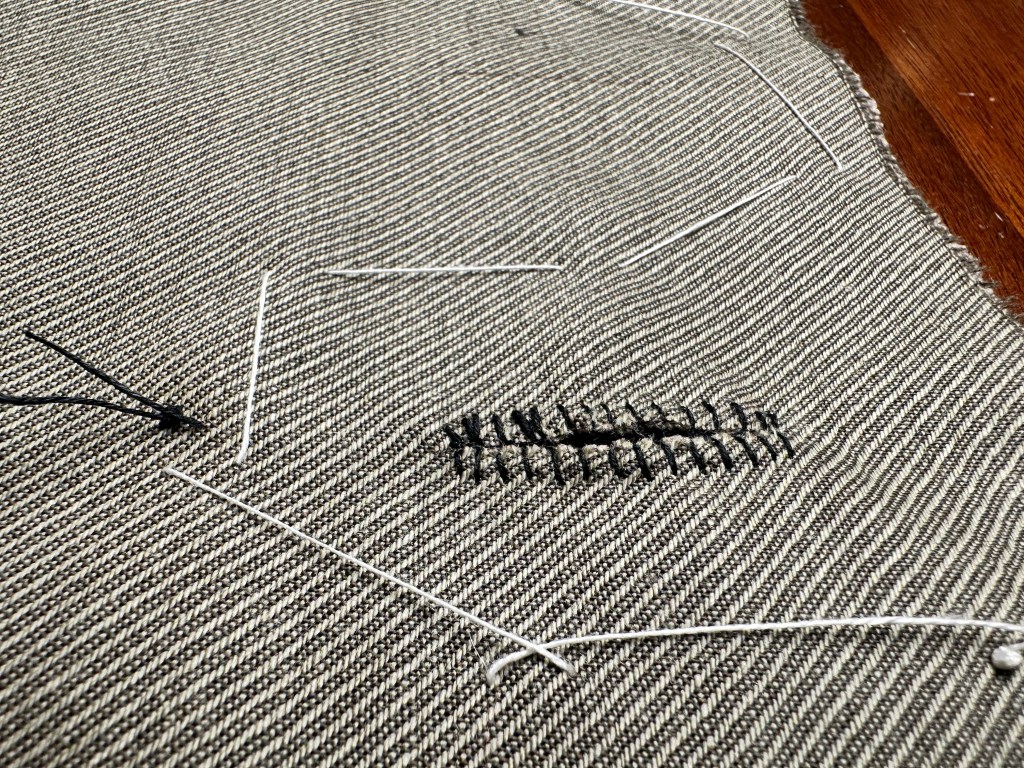
I basted two layers together, but likely need to baste more around the buttonhole itself for the actual doublet. This helps keep the layers together. The V&A book notes on the doublets when they think the buttons were cut one by one and then done before cutting the next, which makes me wonder if they have seen others when the tailor cut all of them at once and then started sewing them.
I marked the hole with a thin marker, cut it with a rotary blade, then used black linen thread to make blanket stitches around the hole.
This is when I ignite the debate about blanket and buttonhole stitches being the same. 😀 I do not believe they are, so captured some pictures specifically to show why I think so.
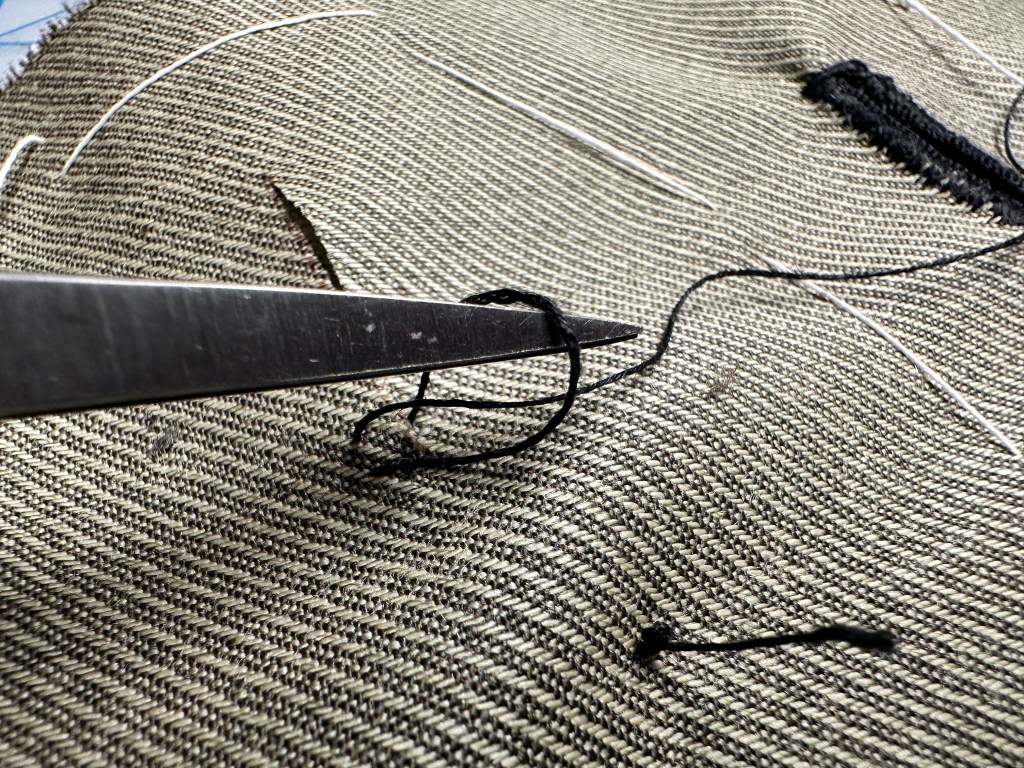
Blanket stitches around the hole further help to hold it together and provide strength. I make them by inserting the needle through the hole and out the fabric, wrapping the tail off the needle around the other side of the needle counterclockwise (away from the direction I’m sewing) and pulling right to tighten it carefully.
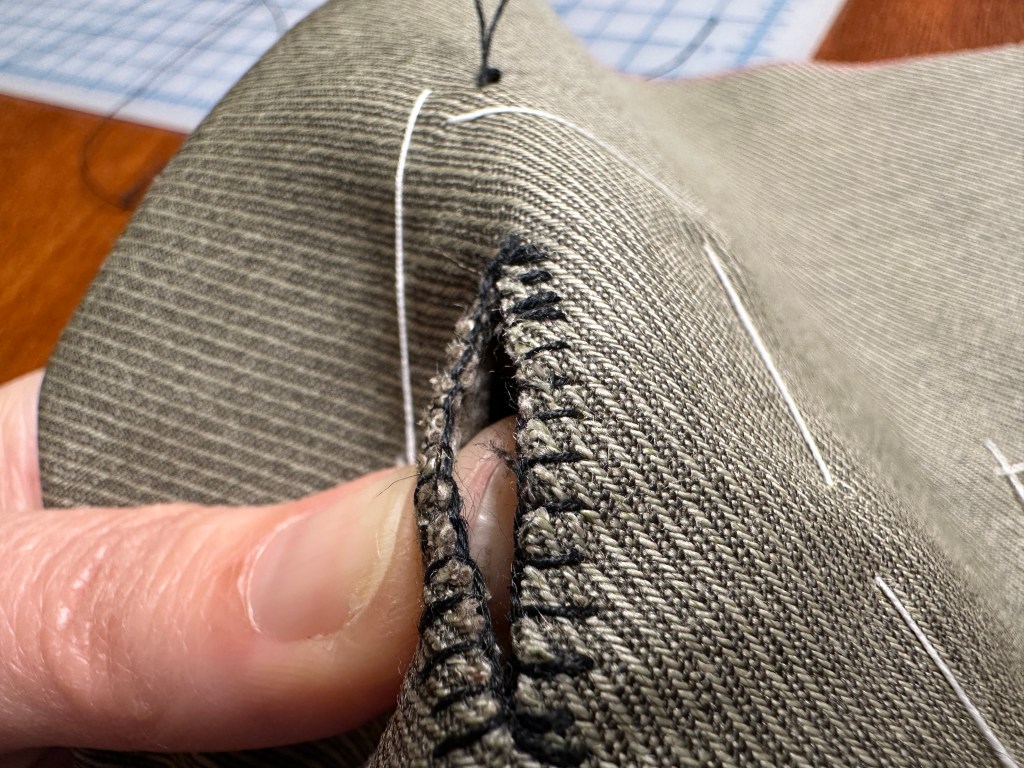
This is what the buttonhole looks like after the blanket stitches are done. They’re fairly far apart but they only stabilize. Note the inner line of thread on the edges of the cut itself.
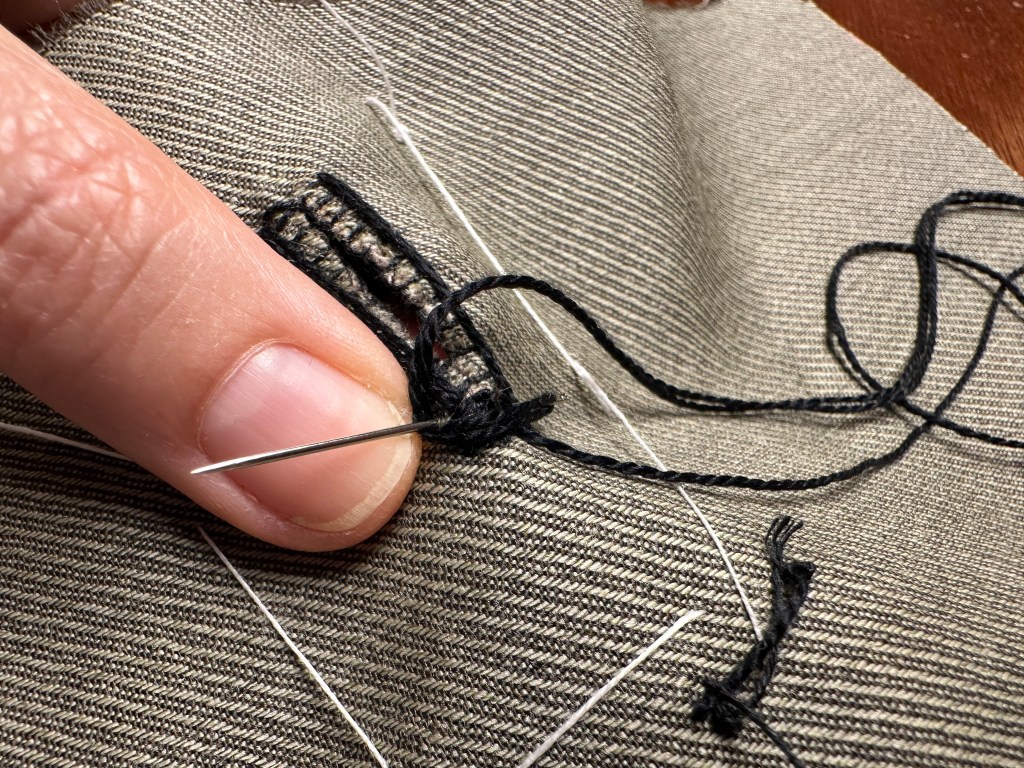
Then comes the silk yarn to do the solid color buttonhole. This is done with the…. buttonhole stitch. It’s executed similar to the blanket stitch above, but the tail of yarn off the needle is wound around clockwise (toward the direction I’m stitching along the hole). The stitches are also made much closer than the linen thread re-enforcing blanket stitches.
This stitch gives you something that looks like this.
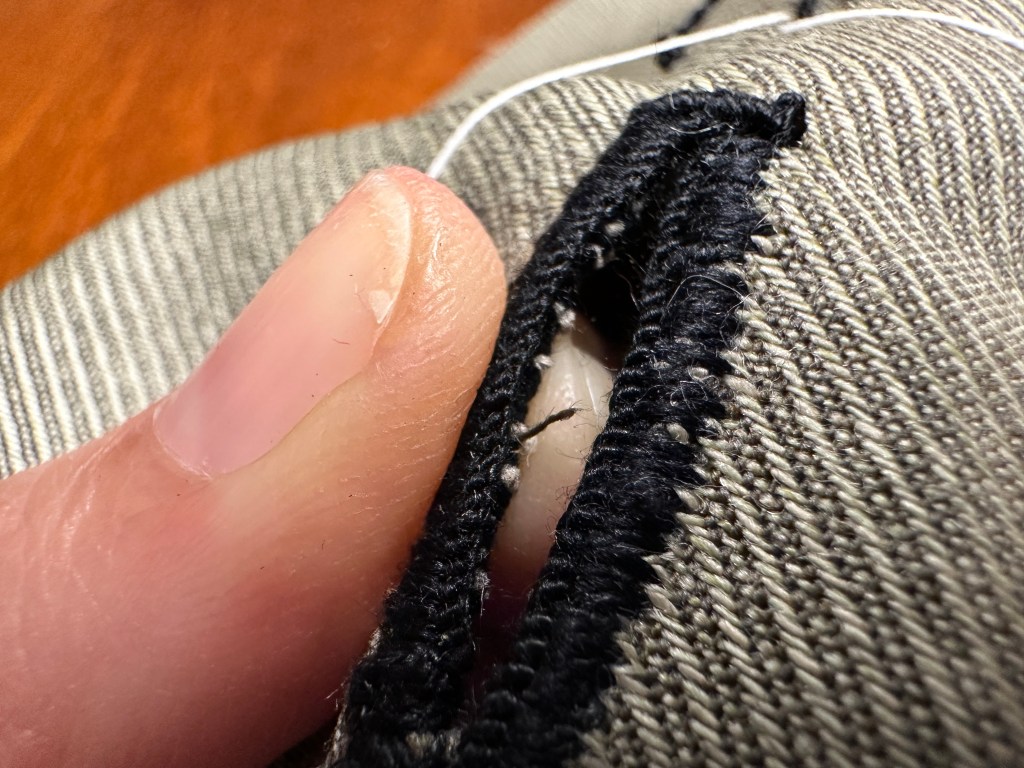
Take a look at the stitch at the cut edges. There is a small knurled knot there due to the direction the yarn was wrapped. This creates a thicker and more durable edge right where the most wear would be, where the button is passed through over and over. This is why I say there is a difference, especially when making buttonholes.
Come at me. 😀
Anyway, the silk is worked over the linen stitches, with thick bars at both ends made by laying down two threads and then wrapping more silk along them. The bars further strengthen the buttonhole against the wear of the buttons.
One last note: I start and end threads an inch or two or three away from the work, burying the thread between the layers. They’re secured at the buttonhole itself, but not with knots. I think this comes from MM, that knots create unsightly wear spots, especially if left on the back of the work. I cut the tails at their emerging point and leave the thread between the layers to avoid that.
It was a good thing I did a few practice buttonholes, as I’d forgotten the order of things and had to check MM a few times. I’ll do another two right before turning to making them on the doublet.
Thanks for reading! 🙂

 Cyboracle's Domain